Saturday, August 6, 2016

Brain Starvation: Could Boys Be Suffering?

By


Brain Starvation: Could Boys Be Suffering?, parent helps, children, classroom, practical experience, peers, performance, adrenaline, blood flow to brain, emotions, feelings, control, education, senses, concepts, hands-on, verbal ability, right brain, left brain, teaching boys, eye contact, discipline, full potential, behavior, homeschool, home education, teach at home, keeper at home, brain development, respond to stress, males, females, relationships, smiling, boy, young child, cute boy, starving, deficiency, brain starving, Dianne Craft, nutritionist, fat, DHA, essential fatty acid, fish oil, mother's milk, healthy fats, corpus callosum, myelin sheath, good sleep patterns, feeling of well-being, positive outlook, self-control, impulsive behavior, anger, anxiety, serotonin, calming, antidepressant, Ritalin, psychotropic drugs, hyperactivity, ADD, sleep problems, dry hair, dry skin, cracked skin, chapped lips, excessive thirst, warts, glare sensitivity, poor vision, mental symptoms, physical symptoms, left brain, judgement, right brain, emotions, fatten up, limit sugar, adrenal glands, child who hates writing, sensory issues, blue eyes, looking up , smiling boy, young boy, happy child
(photo source)
What is brain starvation and what causes it? I recently learned how an easily corrected deficiency in diet can actually cause active brains to function poorly – especially in boys. Please join me as we explore something every parent should know.
[I share this critical guest post by homeschool mom Michelle Caskey (with her permission) because we want your sons to thrive.]
Most of us are aware that boys and girls are different. They see things differently, they play differently and they think differently. I was surprised to find out recently that boys also have different nutritional needs than do girls. Is your son’s brain starving?


I recently had the privilege of attending several seminars by Dianne Craft, who is a special education teacher and a nutritionist. Dianne shared some information with us that I had never heard before. She told us that sixty percent of our brains are made of fat. Thirty percent of that fat is in the forebrain, which is made of

DHA, an essential fatty acid. The only sources of DHA are fish oil and mother’s milk.
Diane told us that we all need healthy fats in our diets to make our brains function properly. The corpus callosum, which is the bundle of nerves that connects the right and left hemispheres, is made of fat. The myelin sheath which coats the nervous system is also made of fat. The good news is brain starvation can be corrected.

Boys have a 3 times higher need for essential fatty acids than do girls. Dianne believes this is because estrogen is a fatty carrier where testosterone is not. This also explains why it’s so much easier for men to lose weight than women. What is an asset for weight loss, however, is not an asset for their brains. Some of our sons are suffering from brain starvation.

Our modern diets are deficient in good fats. We are told to eat margarine instead of butter, egg beaters instead of eggs, skim milk instead of whole milk, and to stay away from nuts because they are high in fat. A lack of essential fatty acids causes our bodies to become deficient in serotonin.

Serotonin has the following beneficial mental effects:

  • Creates a natural, antidepressant release in the body
  • Relaxes the mind
  • Instills a sense of well-being
  • Helps us handle stress
  • Keeps our mind focused
  • Promotes good sleep patterns
  • Helps us to have a positive outlook on life
  • Helps us control our impulses
Our society is becoming more and more deficient in serotonin. There are more people on anti-depressants than ever before. Children are being put on Ritalin and other psychotropic drugs at an alarming rate. Dianne informed us that Ritalin works by releasing serotonin in the body. If parents knew that they could help to positively affect their child’s body chemistry in a more natural way, do you think they would elect to put their child on drugs which may have harmful side effects? I think not.

 So, how do you know if your child is deficient in DHA? Mental symptoms of DHA Deficiency include the following:

  • Hyperactivity
  • ADD
  • Impulsivity
  • Anxiety
  • Anger
  • Sleep problems

Physical symptoms of DHA Deficiency include the following:

  • Dry hair
  • Dry skin
  • Cracks in ends of fingers
  • Chapped lips
  • Excessive thirst
  • Warts
  • Glare sensitivity
  • Poor vision

If your child exhibits any of the above mental and/or physical symptoms, they would be a great candidate for trying to increase their intake of essential fatty acids.

The left hemisphere of our brain is where our judgment resides. It is the logical part of the brain. Our right hemisphere is where our emotion resides. When boys aren’t using good judgment, they are having a difficult time accessing their left hemisphere. Sometimes, this is due to a lack of essential fatty acids, esentially brain starvation. Information can’t travel across the corpus collosum if it isn’t nourished properly. The solution is for us to fatten up their brains!

Correct Brain Starvation


Dianne Craft recommends the following nutritional regimen:

 1. Increase their intake in EFA – EFA stands for essential fatty acids, which are also known as polyunsaturates or “good fats.” There are two types:
If your children don’t eat any of these foods, as mine don’t, you will want to get these nutrients from supplements.   Exact supplements and dosages are detailed in Dianne’s  Biology of Behavior CD set.

2. Try to increase protein – Be sure your children eat protein throughout the day to help stabilize their mood. Try to make breakfast high in protein. These are good, higher protein choices:
  • Nuts and seeds
  • Eggs and sausage
  • Use real butter
  • Use real mayonnaise
  • Use whole milk
  • Tuna and mayonnaise
  • Protein shakes
  • Smoothies with protein powder in them
  • Use real peanut or almond butter (natural so it isn’t loaded with sugar)
  • Cheese and crackers
  • Have dinner for breakfast
Boys usually love to have lots of butter and mayonnaise on their food because they’re craving the fat. These condiments help to balance their body chemistry.

 3. Try to limit sugar and sugary carbs – Sugar tears down the adrenal gland which drains our energy and causes us to go into fight or flight mode much too easily. You don’t want to become the food police; however, try to do what you can to lessen the amount of sugar they’re eating. Fill them up on the protein rich, fatty foods instead and they won’t have as much room for the sugar. By the way, carbs such as cereal, waffles, pancakes, etc. make us tired so it is best to eat them at night.

While some children do require medications in order to change their body chemistry, there are also children who do not. Try making one change per week to your son’s diet and watch the results. Having the right essential fatty acids in your child’s brain will literally change their body chemistry. You may be amazed at the positive changes that you observe in your son.

Our family has been following these and other tips from Dianne for several months and we’ve definitely noticed a difference in all of us. We are all calmer, we are sleeping better, and there seems to be a lot less anxiety around our house.

Dianne has many other excellent suggestions as well!  For more information, check out Dianne Craft’s website.  I would also highly recommend purchasing her Biology of Behavior CD set.

And if you have a child who struggles with focusing, paying attention or has sensory issues, Dianne has nutritional advice for helping with those problems as well.  And she also taught us some great advice for if we have a smart child who absolutely hates the physical act of writing! Be sure to check out those blog posts as well.

Brain Starvation: Could Boys Be Suffering?, parent helps, children, classroom, practical experience, peers, performance, adrenaline, blood flow to brain, emotions, feelings, control, education, senses, concepts, hands-on, verbal ability, right brain, left brain, teaching boys, eye contact, discipline, full potential, behavior, homeschool, home education, teach at home, keeper at home, brain development, respond to stress, males, females, relationships, smiling, boy, young child, cute boy, starving, deficiency, brain starving, Dianne Craft, nutritionist, fat, DHA, essential fatty acid, fish oil, mother's milk, healthy fats, corpus callosum, myelin sheath, good sleep patterns, feeling of well-being, positive outlook, self-control, impulsive behavior, anger, anxiety, serotonin, calming, antidepressant, Ritalin, psychotropic drugs, hyperactivity, ADD, sleep problems, dry hair, dry skin, cracked skin, chapped lips, excessive thirst, warts, glare sensitivity, poor vision, mental symptoms, physical symptoms, left brain, judgement, right brain, emotions, fatten up, limit sugar, adrenal glands, child who hates writing, sensory issues, mother, red head woman
Hi, I’m Michelle. Being a mom to boys can be hard! Homeschooling boys can be even harder, but I’m here to tell you that having sons is a blessing – and it is possible to connect with them and to enjoy spending your days with them.  My desire is that Homeschool-Your-Boys will be a place where parents can be inspired to teach their sons in an environment which will most engage their minds and their hearts.
Click on Michelle’s profile photo to go to Homeschool-Your-Boys! This insightful blog is a treasure trove!

Question:  Have you tried any of the above suggestions?  Were you able to see a difference in your son’s behavior?  
For Pinning:
Brain Starvation: Could Boys Be Suffering?, parent helps, children, classroom, practical experience, peers, performance, adrenaline, blood flow to brain, emotions, feelings, control, education, senses, concepts, hands-on, verbal ability, right brain, left brain, teaching boys, eye contact, discipline, full potential, behavior, homeschool, home education, teach at home, keeper at home, brain development, respond to stress, males, females, relationships, smiling, boy, young child, cute boy, starving, deficiency, brain starving, Dianne Craft, nutritionist, fat, DHA, essential fatty acid, fish oil, mother's milk, healthy fats, corpus callosum, myelin sheath, good sleep patterns, feeling of well-being, positive outlook, self-control, impulsive behavior, anger, anxiety, serotonin, calming, antidepressant, Ritalin, psychotropic drugs, hyperactivity, ADD, sleep problems, dry hair, dry skin, cracked skin, chapped lips, excessive thirst, warts, glare sensitivity, poor vision, mental symptoms, physical symptoms, left brain, judgement, right brain, emotions, fatten up, limit sugar, adrenal glands, child who hates writing, sensory issues,
If you are encouraged by something you have read here at Deep Roots, please consider liking my page on Facebook or subscribe via Feedburner. Thank you!
Thanks for reading!
Jacqueline

(Almost) everything in this restaurant is 3D printed -- including the food!


Lazy or Smart Way of Collecting Tennis Balls?!


El primer país que prohíbe Pokémon Go


El popular juego de realidad aumentada ha sido prohibido por primera vez de forma oficial por las autoridades de un país.
Tyrone SiuReuters

Irán ha sido el primer país que ha prohibido oficialmente el juego de realidad aumentada Pokémon Go "por razones de seguridad", informa el diario británico 'The Independent'.

El Consejo Superior de Espacios Virtuales de Irán, un departamento oficial de la supervisión de actividades por Internet del país, establecido en el 2012, ha vetado el uso de la aplicación, que está disponible en más de 35 países.

A principios de agosto, las autoridades iraníes declararon que el estatus del videojuego en la República Islámica dependería del nivel de cooperación por parte de sus creadores.

Quedar detenido, caer por un acantilado, ser asesinado y otras cosas que ocurren jugando Pokémon Go
A principios de este mes las autoridades militares israelíes prohibieron a sus soldados jugar a Pokémon Go.

Explicaron su decisión por motivos de seguridad y argumentaron que fue una precaución para impedir posibles filtraciones de información secreta y localizaciones de objetos militares.

En julio el máximo órgano clerical de Arabia Saudita renovó una fetua de hace 15 años para prohibir la divulgación de los personajes ficticios de videojuegos de Pokémon Go.

Las autoridades de diversos países se han visto obligadas a tomar medidas ante la 'epidemia' de siniestros relacionados con jugadores de Pokémon Go. La aplicación fue lanzada a principios de julio pero su marcha triunfante, que abre una nueva época en el mundo del entretenimiento, está acompañada por numerosas noticias alarmantes de traumas y heridas que sufren los jugadores en su 'caza' virtual.

Rapunzeles chinas: Conozca el pueblo con el cabello más largo del mundo

Las mujeres yao se cortan el cabello solo una vez en su vida, por lo general antes de casarse.

Reuters

El pueblo Huangluo de la región autónoma china de Guangxi Zhuang es el hogar de los descendientes de la etnia Yao. Las mujeres locales se caracterizan por su vestido bordado de color rojo y su peinado tradicional, que lo hace "pueblo de pelo más largo del mundo" reconocido por el Libro Guinness de los Récords.

Reuters

De acuerdo con China.org.cn, la tribu Yao se remonta a unos 2.000 años y actualmente está formada por 78 familias: unos 600 miembros en total.

Las mujeres Yao se cortan el pelo solo una vez en su vida, por lo general antes de casarse. El cabello unas 60 mujeres del pueblo mide unos 90 centímetros, mientras que el más largo de esta localidad alcanza más de dos metros, informa el diario en línea 'People's Daily Online'.

Reuters

Para mantener su cabello sano y brillante las mujeres lo lavan con el agua de un río cercano, que previamente han utilizado para lavar el arroz glutinoso. Este secreto de belleza ha sido transmitido por generaciones entre las mujeres de la tribu.

This MRI shows what it looks like when an opera singer really belts it. (via Science of Us)


Farthest Distance Limbo-Skating Under Cars Guinness World Records


¿Sabes cómo afecta a los niños la publicidad dirigida de comida chatarra y bebidas azucaradas?


South Koreans are taking photography to the next level with 3D figurines


One-Bowl Blueberry-Lemon Ricotta Pound Cake

Pizza Bouquet


Coffee Frappe


Slow-Cooker Shredded Pork


Amazing Art!


How to Remove Rust


This jewelry used to be a cellphone

This woman makes jewelry out of wasted electronics like the chip in your smartphone

Hace 54 años murió la rubia más famosa del mundo


"How Lazy Cats Drink Water"


Dynamic facade "Kiefer technic showroom"

This facade changes continuously; each day, each hour shows a new "face" - the facade is turning into a dynamic sculpture

PAPAS CON CARNE


Friday, August 5, 2016

Dog Walks Again After Brutal Attack


The star of the "Success Kid" meme used his fame to save his father's life

Remember "Success Kid"? Seven years later, the boy from the popular meme used his fame to help save his father's life: http://nbcnews.to/2b1K1gP

Montaña arcoiris: los colores de la naturaleza


Why Are Bananas At Risk Of Extinction?


Spongebob Cake!


Hey kid. You're a legend. Keep being you. Folks this will inspire you


This shirt lets parents hold their baby like a kangaroo


Everyone is saying flossing is a lie, but WHY?


Huevos con espinacas y queso al horno


Increíble lo que está pasando en Pakistán con los perros


Possible new Guinness World Record for the most dominoes ever toppled

It took 18 people 10 days to create this pretty incredible moment

Happy Birthday NASA’s Curiosity Mars Rover!


Portraits Made Out of Unusial Objects


Este toro estuvo encadenado durante toda su vida… Mira lo que hace cuando la liberan.


This wearable tech is designed to help bikers avoid speeding tickets


Foil takes hand lettering to a whole different level


Busch Gardens Tampa Bay's famous dancing flamingo, "Pinky," had to be euthanized

"Pinky," had to be euthanized this week after suffering injuries so "traumatic" at the hands of a human that she could not be saved. ‪#‎RIPPinky‬

Amazing Scalf Transformation!


Norway Planning An Underwater Floating Tunnel


One gadget is a bell, GPS and light for your bike!


Sometimes there is an unsung hero among us, ready to light the way


This giant bus in China literally drives OVER traffic, not through it


This device makes it easier for people with sleep apnea to get a good night’s rest


5 Alkaline Foods to Eat Every Day


These wireless sensors are the size of grain — and could help fight off multiple diseases


Making a Cuban Sandwich because it's the best sandwich in the world


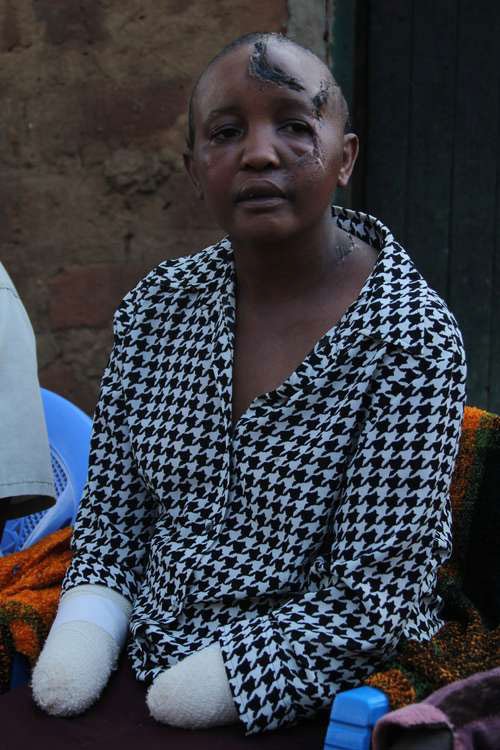
Kenyan man chops off wife's hands for not getting pregnant


Jackline Mwende
Jackline Mwende is recouperating at her mother's home after a vicious machete attack police say was carried out by her husband because they have no children after 7 years of marriage.Twitter/Daily Nation


By


Horrified female supporters have rushed to the aid of a Kenyan woman whose hands were chopped off by her husband because she has not been able to conceive a child, according to law enforcement authorities.
Jackline Mwende's husband, Stephen Ngila, attacked her in their home with a machete, officials said.

The brutal assault also left her with severe head injuries. Mwende was rushed to a local hospital and Ngila was arrested the following day.


The hospital said It was Ngila who had "reproductive issues," not his 27-year-old wife, and that he was unable to impregnate her over seven years of marriage, reported the Daily Nation.

"It is really sad that something of this nature would happen in this time and age," Kenyan member of parliament Joyce Wanjala Lay told CNN. "Having a child is a shared responsibility. A woman without a child is still a woman and even more stronger."

The attack has been condemned by politicians, activists and citizens across Kenya. Mwende is recouperating at her mother's home about an hour from the capital, Nairobi, and receiving visits from several women's rights activists.

"I know we are better than this depraved sexist violence," said local activist Irungu Houghton. "A society that can't keep all safe means no one is safe."

The Bangladeshi embassy in Kenya has promised to provide Mwende with medication for at least three months, while activists have offered to provide her with prosthetic limbs, a $250 (£190) allowance per month, transport to therapy, and business skills to help prepare her for life after recovery.

The local county government of Machakos, where Mwende lives, will cover all medical expenses, including for therapy, for a year. It's also paying her an additional monthly stipend and will cover the costs for a housekeeper.

"We are touched by her situation and condemn this beastly act," Lilian Ng'ang'a, wife of the governor of Machakos, told the Star after visiting Mwende at her mother's home.

Meet the King of Cheeseburgers


This canoe folds up like a piece of origami.


Artificial Heart Pump

This device could save thousands of lives from heart failure

Matcha goes with everything, including cream puffs


Auto Cooking Stirrer


An entire farm can fit into this box

This ‘farm from a box’ can feed an entire community

Amazing! This artist creates mind-bending 3D drawings


Thursday, August 4, 2016

Ever heard of the Prophecy of the Seven Thunders? A native american prophecy, many believe that we are living these times right now...


We don’t know how he discovered his talent, but this guy is surprisingly good at throwing toilet paper rolls


Can you beat her?


Sangria 4 Ways


El Castillo is the largest pyramid in Chichen Itza


This electric scooter only requires one push to get going


"Working with the dough is a mutual cooperation."


La llaman 'La Isla de los Esclavos Olvidados'


Watch: World's First Transit Elevated Bus TEB-1 On Its First Road Test in Qinhuan


This theme park is dedicated entirely to wine


A new way to eat carrots!


Don’t be fooled by the cuttlefish’s hypnotic dance—this flashy cephalopod can be deadly

The science behind how lipstick is made


An amazing tumbling bowl


17 year old develops ocean cleanup array that will remove 7,250,000 tons of plastic from the world’s oceans!


Wait wait.. what?! The benefits of flossing your teeth are unproven, according to a new report.


Aren't these dresses poo-tiful?

Do you get anxious when you see dark storm clouds? Then you might have Nephophobia, fear of clouds


These healthy veggie rolls from Kitchenbowl are sure to be a hit!

Scientists are studying fire ants to learn how to develop self-healing materials


El padre vio su cara y la abandonó. 21 años después ella demuestra al mundo que la belleza está de verdad en el interior


Ryskan1


Por

Hace 21 años Irina Nezhentseva dio a luz a una deseada hija. Pero ella pronto se dio cuenta de que había algo extraño. La madre vio que a su hija Katja le empezaban a salir arrugas en la cara. Irina descubrió que su hija se hacía mayor por horas.

El padre de Katja se asustó y abandonó a la familia porque no soportaba ver a su hija envejecer tan rápido. "No puedo soportar a la niña”, dijo el padre, y cogió su maleta y se fue de la casa. Los médicos le diagnosticaron progeria, una enfermedad extremadamente rara que hace que el cuerpo envejezca muy rápido.

Las personas afectadas suelen vivir una media de 13,5 años, y rara vez más de 16. Pero Irina decidió no darse por vencida e hizo todo lo posible por darle a su hija una vida buena y segura. Ella vivió cada día como si fuese el último con Katja y la colmó de amor.

Irina Nezhentseva dio a luz a su hija hace 21 años en la ciudad de Novyj Urengoj, en Rusia. Después del parto los médicos se dieron cuenta de que la niña, Katja, padecía una enfermedad genética congénita que causa que el cuerpo envejezca aproximadamente ocho veces más rápido de lo normal.

Este síndrome, llamado progeria, es extremadamente raro y se da en 1 de cada 8 millones de nacimientos.
El padre de Katja no quiso saber nada de su hija y abandonó a la familia.

progeri
Los niños con progeria generalmente se ven bastante sanos al nacer. No es hasta los 18-24 meses cuando el envejecimiento se acelera. Actualmente no existe ninguna cura para esta enfermedad y los afectados por progeria mueren pronto. Pero Katja desafió todos los pronósticos.
progeri1
La madre de Katja, Irina, decidió dar a su hija todo el amor del mundo.
Pero no fue fácil. Los demás niños del barrio se reían de Katja y no entendían qué pasaba con la niña arrugada.
”Abuela, ¿por qué llevas una minifalda? ¿Por qué juegas con niños?”, solían preguntar los niños a Katja. Irina se quedó devastada cuando vio cómo era tratada su hija.
katja11
Pero fue cuando comenzó la escuela cuando realmente la niña entendió lo diferente que era de otros niños.
”Entonces me di cuenta de que no le gustaba a nadie. Cuando aparecía y la gente veía mi cara, se asustaban. Yo me preguntaba: ¿qué he hecho yo para merecer esto? Pero nunca encontraba respuesta.”, cuenta Katja en la web Hefty, y continúa:
”Pensé mucho en eso, pero no podía aceptar mi apariencia, así que intenté cambiar mi propia imagen para mostrar mi interior. Yo quería mostrar que también era una chica con encanto y con un montón de cualidades. Yo esto segura de que lo importante es el interior de las personas”.
katja12
Y eso es lo que hizo. Lo más fantástico fue que la gente comenzó a ver más allá de su enfermedad. Se convirtió rápidamente en la favorita en al escuela, y si alguien intentaba burlarse de ella, se tenía que enfrentar a sus muchos amigos.
”Yo me acepté a mí misma y comencé a ser yo misma. Y pensé así: sólo hay otras 20 personas como yo en el mundo, ¡realmente es muy interesante!”
katja99
La alegría de Katja sorprendió a todas las personas que conocía. La niña creció con confianza en sí misma, una joven con sueños para el futuro, como las demás. ¿Su objetivo en la vida? Ser feliz.

katja17
A los 21 años ocurrió algo en la vida de Katja. Conoció a Denis, el que después sería su marido. Él llamó por error a Katja (había marcado mal el número). Comenzaron a hablar y decidieron quedar. Se enamoraron rápidamente. La decisión de casarse la hizo muy feliz.

katja1
Pronto tenía la pareja buenas noticias. Katja estaba embarazada de su primer hijo. Algunos no estaban seguros de si era una buena decisión, pero la pareja sabía lo que quería. 9 meses después dieron la bienvenida al mundo a un precioso niño.
cool1
”Estoy muy bien y muy contenta de haber tenido la confianza que me dio las fuerzas para pasar por todas las dificultades con las que me encontré. Ahora tengo un marido y un hijo ¿qué podría ser mejor?”, dice Katja.
gosa1

Fuente: Youtube.

La historia de Katja es realmente una importante muestra de que nada, ni el peor diagnóstico médico, puede quitarle el derecho a ser feliz a nadie.

Get a live view from the ocean floor as NOAA Ship Okeanos Explorer goes on a discovery mission in the Pacific


This pen can ‘steal’ color from whatever you point it at


Wednesday, August 3, 2016

How Coconut Oil May Rescue The Brain From Alzheimer’s Disease


(alicjane/shutterstock)

The internet loves a good “natural cure” recovery story.  For instance, when Dr. Mary Newport, MD, dramatically reverses her husband’s symptoms of Alzheimer’s disease after just two weeks of adding coconut oil to his diet, thousands enthusiastically share the story.

But despite their popularity, anecdotes rarely stand the test of time, nor the scrutiny of the medical community, at least not like experimental research published in peer-reviewed biomedical journals.

All the more reason to celebrate a promising new study soon to be published in the Journal of Alzheimer’s Disease titled, “Coconut Oil Attenuates the Effects of Amyloid-β on Cortical Neurons In Vitro.” 

The study lends fresh experimental support to an accumulating body of anecdotal reports that coconut oil may alleviate and/or regress cognitive deficits associated with aging and neurodegenerative diseases such as Alzheimer’s disease and Parkinson’s.
 
As the brain ages, it becomes increasingly resistant to insulin, and therefore incapable of using glucose efficiently to meet its significant energy needs.

Medical researchers from the Memorial University of Newfoundland, St. John’s, NL, Canada, undertook a pilot study to investigate the effects of coconut oil supplementation directly on cortical neurons treated with amyloid-β (Aβ) peptide in vitro.  Aβ peptide is the main component of certain deposits found in the brains of patients with Alzheimer’s disease believed to contribute to the disease.

The researchers noted that a recent clinical trial reported significant improvements in Alzheimer’s disease patients after 45 and 90 days of treatment with medium chain triglycerides from coconut oil. 

They pointed out that this trial led to the marketing of the FDA-approved ‘medical food’ caprylidene (trade name Axona), but that the public has shown greater interest in coconut oil itself as a potential therapy, owing to its far greater affordability and availability.

The researchers sought to test the hypothesis that coconut oil is beneficial for neurodegenerative conditions using a cell model.  Live rat neurons were exposed to various combinations of Aβ peptide and coconut oil, with the result that Aβ peptide reduced survival of neurons and coconut protected against this Aβ-induced reduction in survival time. 

The researchers noted that coconut treated Aβ cultured neurons appeared “healthier,” and that coconut oil “rescued” Aβ-treated neurons from mitochondrial damage caused by their toxicity.  The researchers observed coconut oil preventing Aβ-induced changes in mitochondrial size and circularity.

These findings have great significance, as mitochondria function is often compromised in the brains of Alzheimer’s disease patients.


(stevepb/pixabay)
(stevepb/pixabay)


According to the researchers, “The rationale for using coconut oil as a potential AD [Alzheimer’s Disease] therapy is related to the possibility that it could be metabolized to ketone bodies that would provide an alternative energy source for neurons, and thus compensate for mitochondrial dysfunction.” 

The researchers proposed that ketone bodies formed as a byproduct of coconut oil metabolism may offset Aβ-induced impairment of mitochondrial function and thus energy metabolism. 

Considering that the medium chain triglyceride found in coconut known as caprylic acid does cross the blood-brain barrier, and has recently been found to have anti-convulsant, in addition to, ketogenic effects, coconut oil likely does have a neuroprotective effect.
 
 Coconut oil provides the substrate for the immediate production of these ketone bodies, enabling significant quantities to be produced within a matter of only minutes following ingestion.

The researchers concluded, “The results of this pilot study provide a basis for further investigation of the effects of coconut oil, or its constituents, on neuronal survival focusing on mechanisms that may be involved.”

Clearly, one of the ways that coconut oil can ‘rescue’ the brains of Alzheimer’s patients is by addressing the metabolic derangement in the brain associated with the condition, or what is known as “type 3 diabetes.”

As the brain ages, it becomes increasingly resistant to insulin, and therefore incapable of using glucose efficiently to meet its significant energy needs — hence the metaphor “type 3 diabetes.”

Thankfully, nature has devised an alternative fuel source for the brain that is independent of glucose utilization and the insulin signaling system, namely, the use of ketone bodies. 

Coconut oil provides the substrate for the immediate production of these ketone bodies, enabling significant quantities to be produced within a matter of only minutes following ingestion.

This metabolic restoration of function may explain why remarkable recoveries in cognitive function and memory have been observed, anecdotally.

Celebrate your love for Harry Potter by making your very own Pumpkin Pasties


Would you risk death by electric shock to repair your town's power lines? This man is doing just that


La tórrida historia de amor y traición que nadie notó en esta foto

Fíjate bien, es evidente si ves más alla de sus rostros. Es de esos amores prohibidos que vale la pena contar. Y si después de ver esto quieres más detalles http://trib.al/aUPP2pi

El ‘balconing’ y otros excesos del turismo masivo en España

Jóvenes ebrios saltando desde balcones o el "mamading" son algunas de las imágenes que cada año se repiten en las comunidades más turísticas


Turistas se pasean desnudos por el barrio de la Barceloneta en verano de 2014.

Barcelona

La llegada de turistas a España durante los últimos años ha sido imparable. 
En 2015, 68,1 millones de extranjeros visitaron nuestro país, la mayor cifra de la historia. Hasta mayo de 2016, llegaron 25,2 millones, un 11,4% más que en el mismo periodo del año anterior.

Unas cifras récord que suponen grandes impactos económicos como la creación de empleo, pero que también afectan a la convivencia en las zonas más turísticas de España.

Ciudades como Barcelona ya han tomado medidas para paliar el ruido, la limpieza y el aumento de los “actos incívicos” durante este verano. Turistas entrando desnudos a comprar en supermercados, muertos por ‘balconing’, o fiestas de alto contenido sexual como la del “mamading” en Magaluf (Mallorca) son algunos de los efectos del turismo de borrachera y “low cost” que durante los últimos años han proliferado en las comunidades más turísticas de España.

Las zonas más populares dedicadas al turismo juvenil, de discoteca y barra libre tienen calles y zonas exclusivas para el desenfreno y el consumo sin límites.
“Balconing”, deporte nacional del turismo de borrachera

En 2013 el Ayuntamiento de Salou (Tarragona) decidió multar con 300 euros a los turistas que hicieran balconing, práctica consistente en saltar de un balcón a otro de un hotel o de un balcón a la piscina. Famoso es el llamado 'Saloufest', evento para universitarios británicos e irlandeses en el que reina el alcohol y la juerga sin fin.

En Magaluf (Mallorca), un joven británico de 25 años tuvo el dudoso honor de convertirse en la primera víctima de esta práctica en la temporada 2016. La víctima resultó herida de carácter grave tras sufrir un traumatismo craneoencefálico al caerse desde un metro y medio de altura de la terraza del hotel donde se alojaba.

En 2015 el ayuntamiento de esta pequeña localidad costera al sur de Mallorca también reaccionó al fenómeno, calificando el balconing como falta grave, con multas de entre 750 y 1.500 euros. “La temporada no empieza hasta que llega el primer turista muerto por balconing, es una frase irónica recurrente entre los mallorquines.

‘Mamading’ en Magaluf
La localidad mallorquina de algo más de 4.000 habitantes es uno de los puntos más calientes del turismo de borrachera en España.

En julio de 2014 un vídeo en el que se veía a una chica irlandesa de 18 practicando una felación en serie a una veintena de jóvenes borrachos a cambio de una copa dio la vuelta al mundo.

 El mamading, práctica apodada tras la difusión del vídeo, tuvo un gran revuelo internacional y fue portada de periódicos sensacionalistas en el Reino Unido.

Desde entonces, Baleares combate la imagen de turismo de borrachera que tiene en El Arenal (Llucmajor) otros de sus enclaves por excelencia.


Hacer la compra desnudo en Barcelona


La foto de unos turistas haciendo la compra desnudos en 2014 en un supermercado del tradicional barrio de la Barceloneta (Barcelona) llevó al hartazgo de sus vecinos. La cercanía de la playa y de zonas de discotecas como el Puerto Olímpico son los factores que pusieron en el punto de mira del turismo masivo a este tradicional barrio de pescadores.

La instantánea estalló una protesta vecinal que a día de hoy todavía persigue con manifestaciones contra los locales de música y los apartamentos de uso turístico. Los vecinos aseguran que resulta muy difícil vivir en el barrio, sobre todo en verano, cuando las calles se abarrotan de jóvenes británicos hospedados en apartamentos de uso turístico ilegal.

El Ayuntamiento impulsó en julio “El Plan de verano 2016”, un conjunto de medidas como el del aumento de los agentes cívicos, instalación de urinarios públicos o inspecciones nocturnas en apartamentos turísticos ilegales.

La Fortuna de Pablo Escobar

Pablo Escobar movió toneladas de droga… y recibió toneladas de dinero

Estas son las increíbles formas que toman los "ferrofluidos".


Bruxismo: así te llevas el estrés a la cama


Glass-bottomed walkway over 4,600 ft drop opens in China


Tiger Rips Bumper off Car.

Just one week after a woman was killed in the same safari park.

Monday, August 1, 2016

Shows the refill and flushing of veins up to 10mm deep -- in real time!


This company wants to turn any skateboard into an electric one


Parece magía pero es sólo ciencia, está percha plancha sola las camisas - vía Diario Ecología.com


0001ipress


Juan Garrote es un emprendedor español que usó sus conocimientos en biología para crear esta revolucionaria percha, destinada a eliminar de golpe el plomizo proceso de planchado en nuestro día a día.

Basta con estirar las prendas según su diseño especialmente ajustable y rociarlas con un pulverizador para obtener un alisado perfecto en toda nuestra colada. iPress es un revolucionario invento que te ahorrará mucho tiempo, sin duda, en los quehaceres del hogar, tal y como ocurre con este otro sistema.

Por lo visto, las arrugas se forman al enlazarse químicamente las moléculas de los tejidos. Si tensas las prendas y las hidratas simplemente con agua, esos enlaces moleculares se disuelven y la ropa vuelve a su estado liso normal. Este es su vídeo de presentación:


iPress consiste básicamente en una resistente percha, que se ensambla fácilmente en poco tiempo, donde colocar las prendas y tensar las varillas para luego aplicar el pulverizador.

¿Alguna vez nos hemos puesto una camisa no muy arrugada y al cabo de un rato parece como si estuviese más lisa?

Eso es por la tensión originada por llevarla puesta y la humedad que desprende el propio cuerpo. El principio de iPress es el mismo.

 Dos situaciones:

1. Ropa seca y arrugada: se coloca la prenda, se tensa y se aplica el pulverizador. Ojo, porque donde no se aplique no quedará completamente liso. Una vez humedecida, puedes destensar la camisa o vestido y guardarla en el armario hasta que se seque. Si necesitas un mínimo remate con plancha tradicional puedes hacerlo sin sacar la prenda tensada de la percha.

2. Ropa recién sacada de la lavadora: el proceso es más sencillo y rápido. Tensar y secar en la misma percha. 

Ni qué decir tiene el ahorro que supone el invento en cuanto a energía, agua, tiempo, espacio (puedes colgar la ropa ya estirada con la percha directamente, así que en un tendedero te caben muchas prendas más), evitas quemaduras, proteges la ropa, reduces emisiones…

 Puedes desmontar el kit y llevarlo fácilmente en la maleta junto con un pulverizador especial para viajes. Ideal para hoteles, caravanas, travesías en barco… La ropa se plegará lisa y llanamente a tus circunstancias.

Precio y disponibilidad iPress se comercializa directamente a través de su página web.

De momento el invento sólo es aplicable a camisas, vestidos y prendas similares, aunque se está trabajando en un modelo apto para pantalones.

Estamos muy metidos en esto de la realidad aumentada


Cheesy "Mexican" Lasagna


This coffee maker can make cold brew coffee in just 10 minutes


Future Transport: What's the next big idea?


This is The White House's first deaf receptionist — and she’s giving a tour of the West Wing in sign language


When your meal fights back!


Amazing Lifehack


Matt King is an accessibility engineer at Facebook, who was born visually impaired

He's working to make Facebook photos and Messenger easier for the blind community to enjoy. http://cnnmon.ie/2aehfak Via CNNTech

This woman can lick her own eyelid


Japanese Driverless Bus

"I really hope that we drive safe without any accidents," senior manager at DeNA Co, the developer of the bus.